
MUSEUM OF SAN ISIDRO: THE ORIGINS OF MADRID
MADRID CITY COUNCIL
COORDINATION, PRODUCTION, ASSEMBLY AND GLOBAL MANAGEMENT
2017
The Museum of San Isidro: The Origins of Madrid opened in 2000, the culmination of a long process of museographic installation that has turned the museum into a space for exploring the history of a city that spans more than 500,000 years. This latest phase of the intervention reorganised the exhibition spaces and the prehistoric and medieval exhibits which the building holds.
The reconstruction of the building, carried out in the last third of the twentieth century, included the reinstatement of historical elements like the Plateresque courtyard and the chapel, using archaeological data and historical plans to ensure their authenticity. In the area behind the building, once a garden, Valentín Quintás Ripoll designed new rooms with reinforced concrete hyberbolic paraboloid roofs. The architectural context established by this expressionist design had a direct impact on the museographic decisions, generating a visual dialogue with the arches and the new display cases.
Ypunto played a crucial role in the technical development of the functional systems for the display cases and their manufacture. With their compromised geometries and diagonal layout, these cases optimise the exhibition space, establishing a coherent visual rhythm with the paraboloids. The Ypunto team also made the scale models, interactives and audiovisuals that complement the museum's historical narrative.
A major milestone was the integration of the Gothic remains of the Jerónimos monastery that were discovered during the excavations undertaken for the extension of the Museo del Prado in 2002–2003. Pieces such as ashlar stones, latticework panels and voussoirs were measured and carefully rebuilt to guarantee their conservation and exhibition. Accompanied by projection mapping, this installation recreates the original architectural context, allowing visitors to appreciate its historical significance.
The museographic installation was completed under the leadership of Eduardo Salas and the coordination of Alberto González. The end result successfully integrates historical, architectural and technological elements to present an engaging history of the origins of Madrid.
Ypunto played a crucial role in the technical development of the functional systems for the display cases and their manufacture. With their compromised geometries and diagonal layout, these cases optimise the exhibition space, establishing a coherent visual rhythm with the paraboloids. The Ypunto team also made the scale models, interactives and audiovisuals that complement the museum's historical narrative.
A major milestone was the integration of the Gothic remains of the Jerónimos monastery that were discovered during the excavations undertaken for the extension of the Museo del Prado in 2002–2003. Pieces such as ashlar stones, latticework panels and voussoirs were measured and carefully rebuilt to guarantee their conservation and exhibition. Accompanied by projection mapping, this installation recreates the original architectural context, allowing visitors to appreciate its historical significance.
The museographic installation was completed under the leadership of Eduardo Salas and the coordination of Alberto González. The end result successfully integrates historical, architectural and technological elements to present an engaging history of the origins of Madrid.
CLIENT
MADRID CITY COUNCIL
TYPE
MUSEUM/PERMANENT EXHIBITION
PROJECT
CHARLES BARROT
LOCATION
-
AREA
1300 m²
PHOTOS
©YPUNTO ENDING
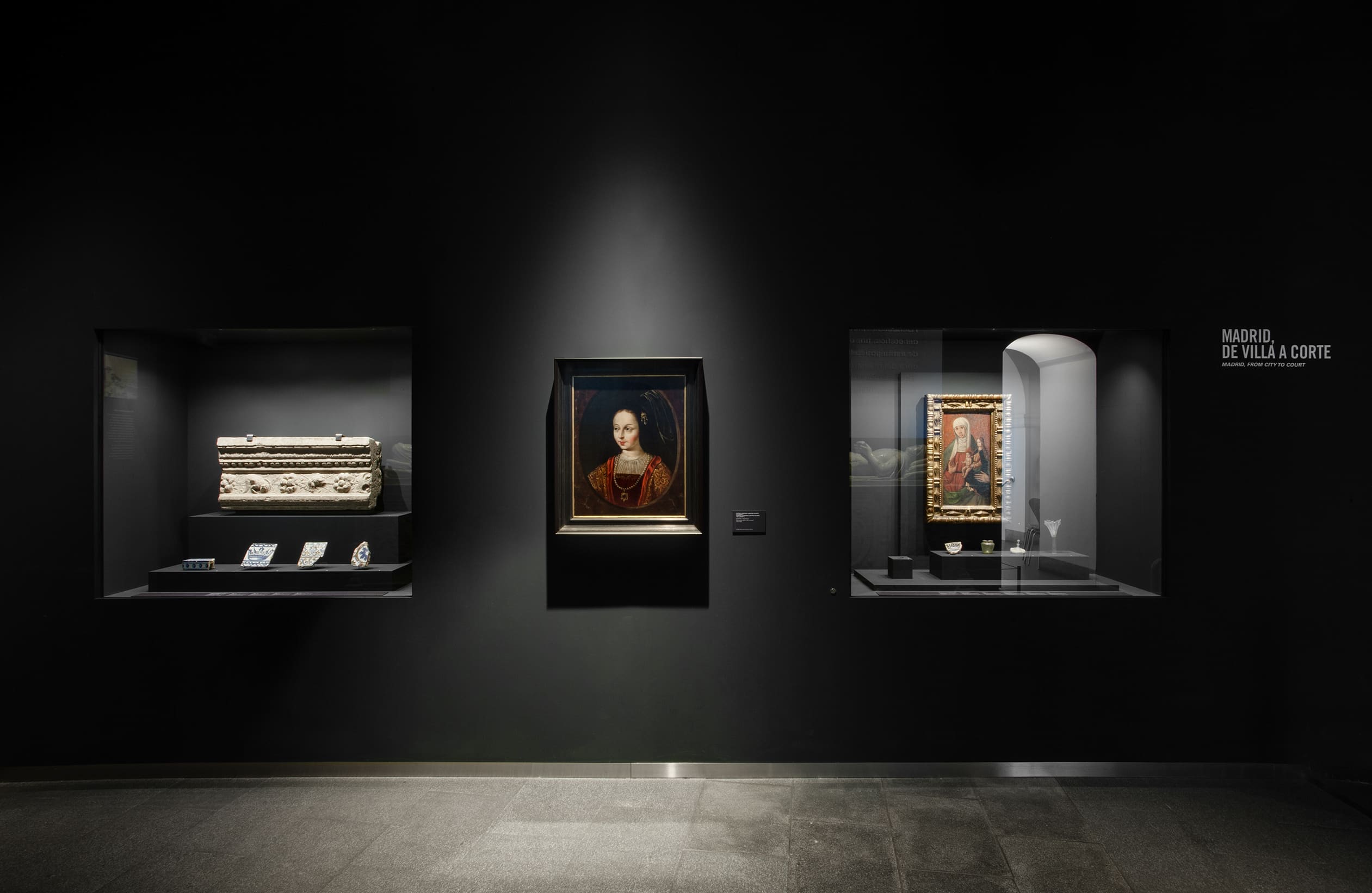
Pieza pictórica y vitrinas con elementos arquitéctónicos y decorativos
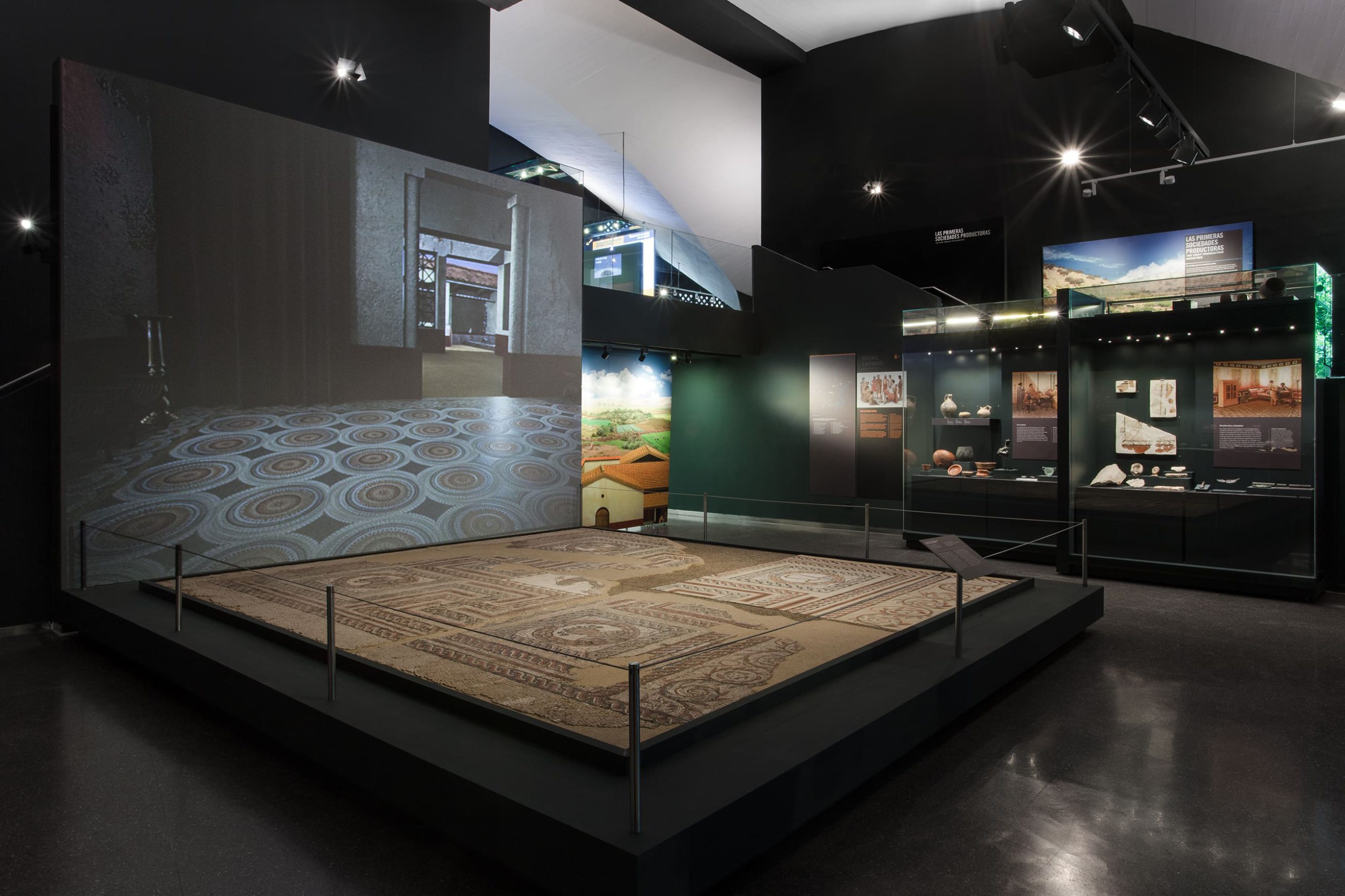
LOS ORíGENES DE MADRID. RECONSTRUCCION DE MOSAICO Y VIDEOMAPPING
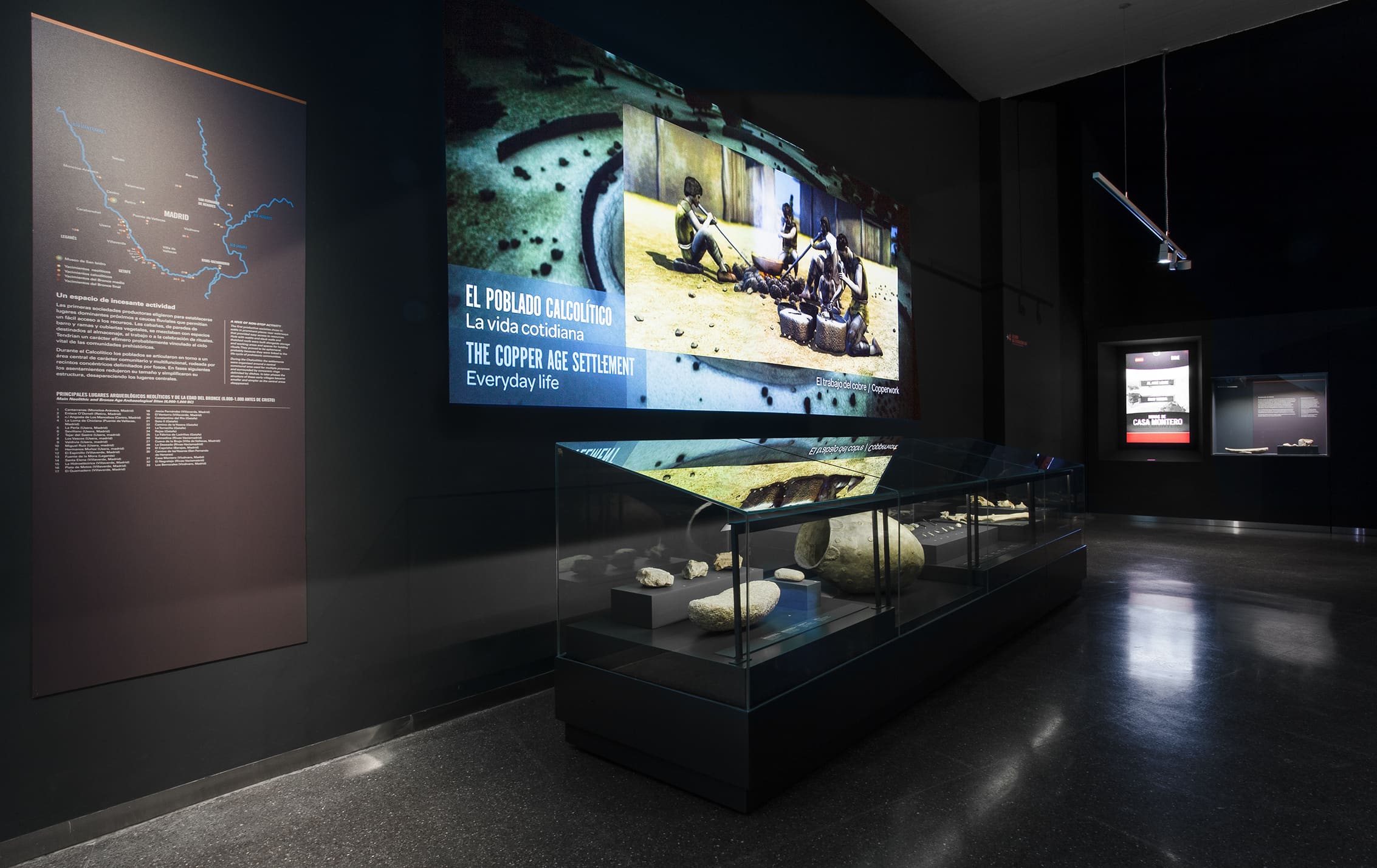
VITRINA EXPOSITORA CON PIEZAS ARQUEOLóGICAS DE USO COTIDIANO
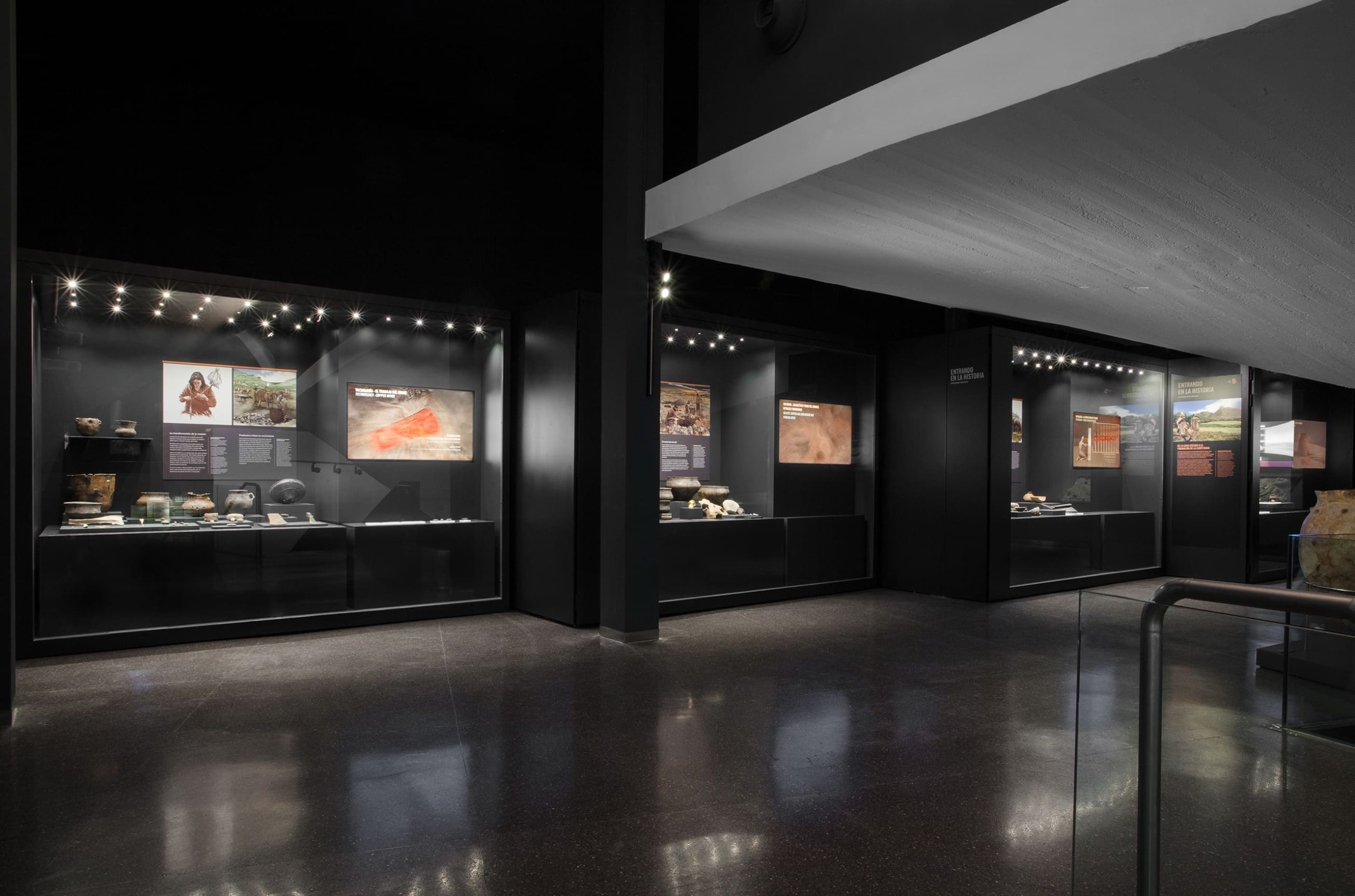
VITRINAS EXPOSITORAS EN SALA DEL MUSEO DE SAN ISIDRO
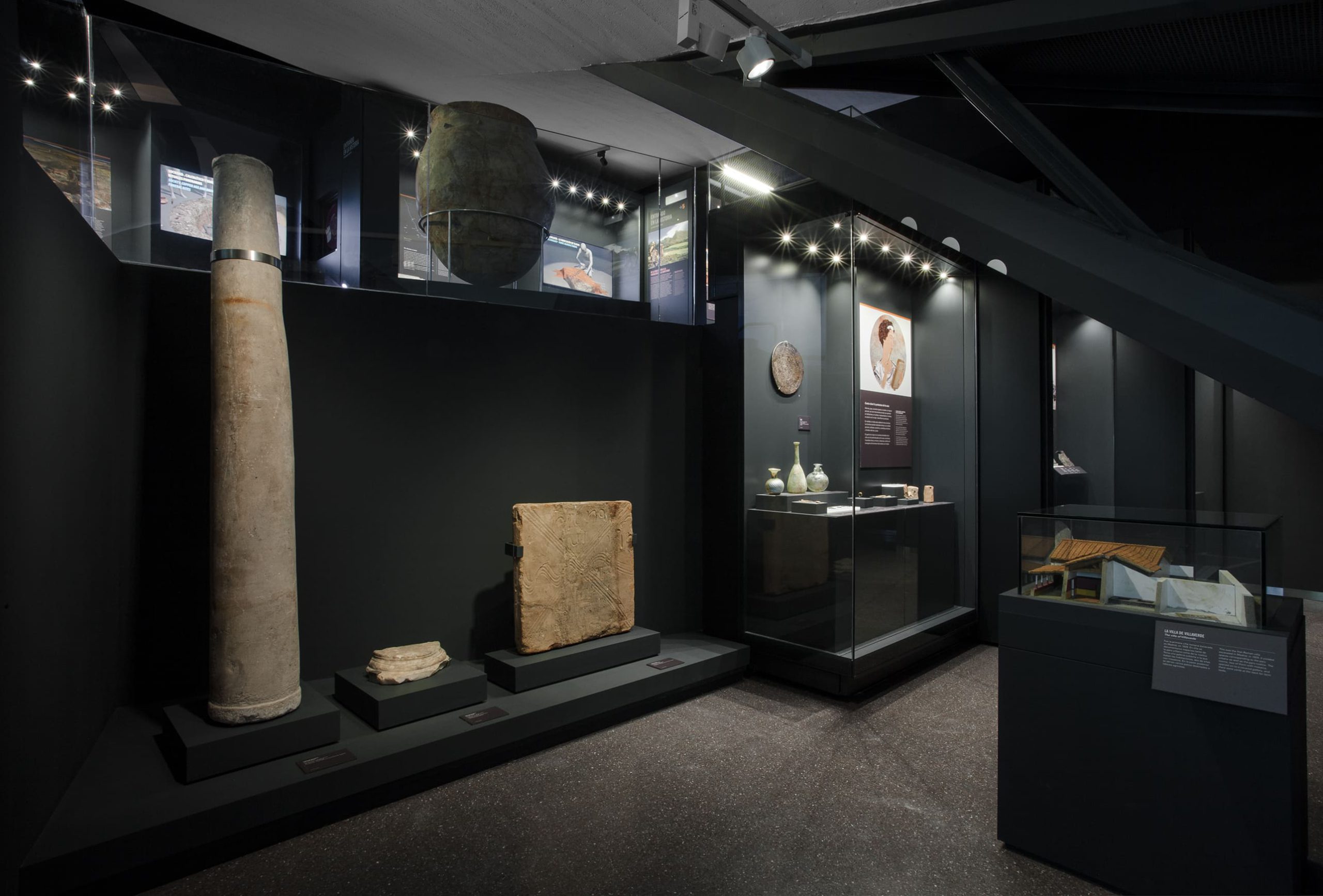
PIEZAS ARQUOLóGICAS DE EXPOSICIóN PERMANENTE LOS ORIGENES DE MADRID
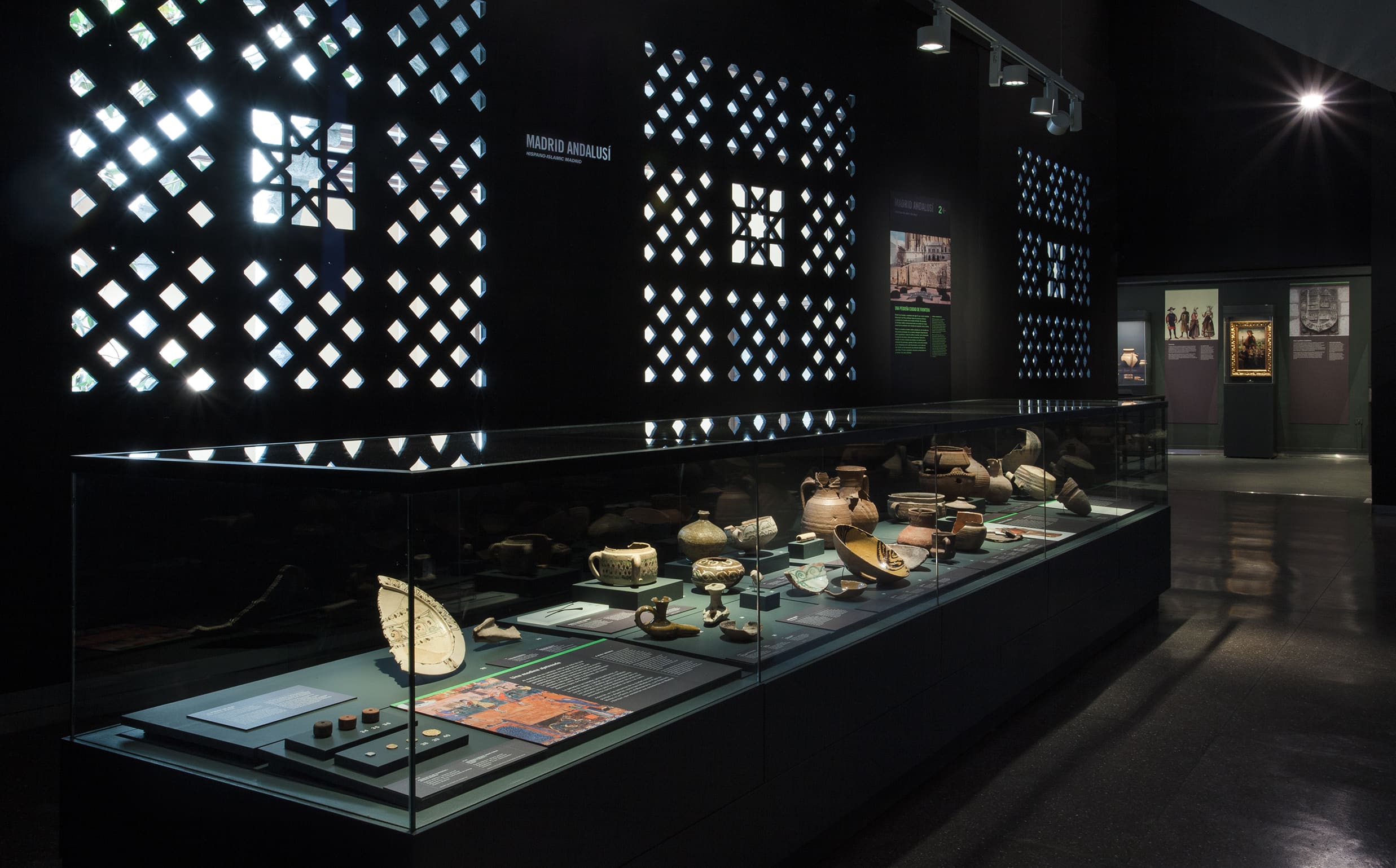
VITRINAS EXPOSITORAS Y CELOSíAS EN EL MUSEO DE SAN ISIDRO
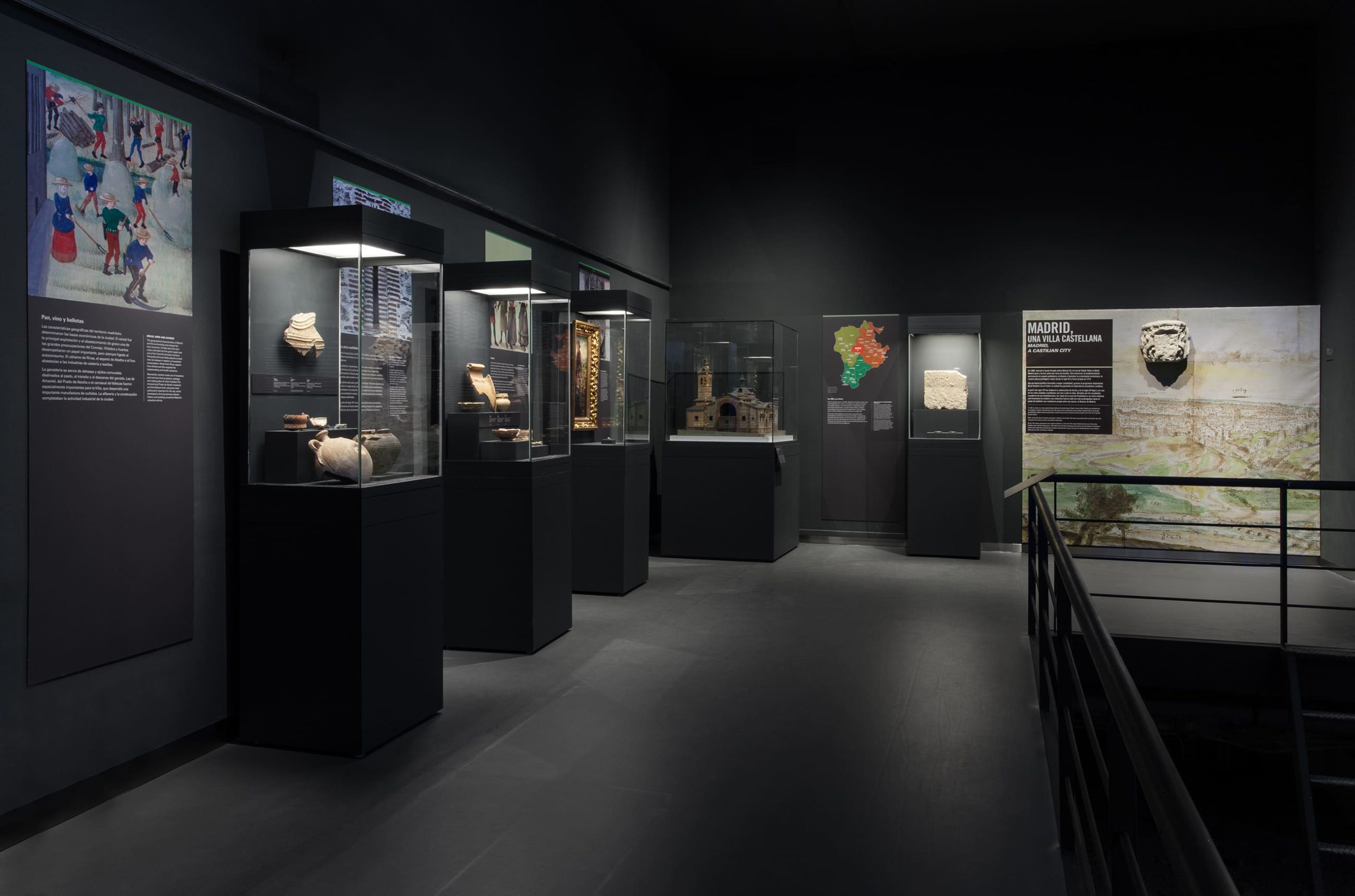
SALA DE EXPOSICIONES DEL MUSEO DE SAN ISIDRO
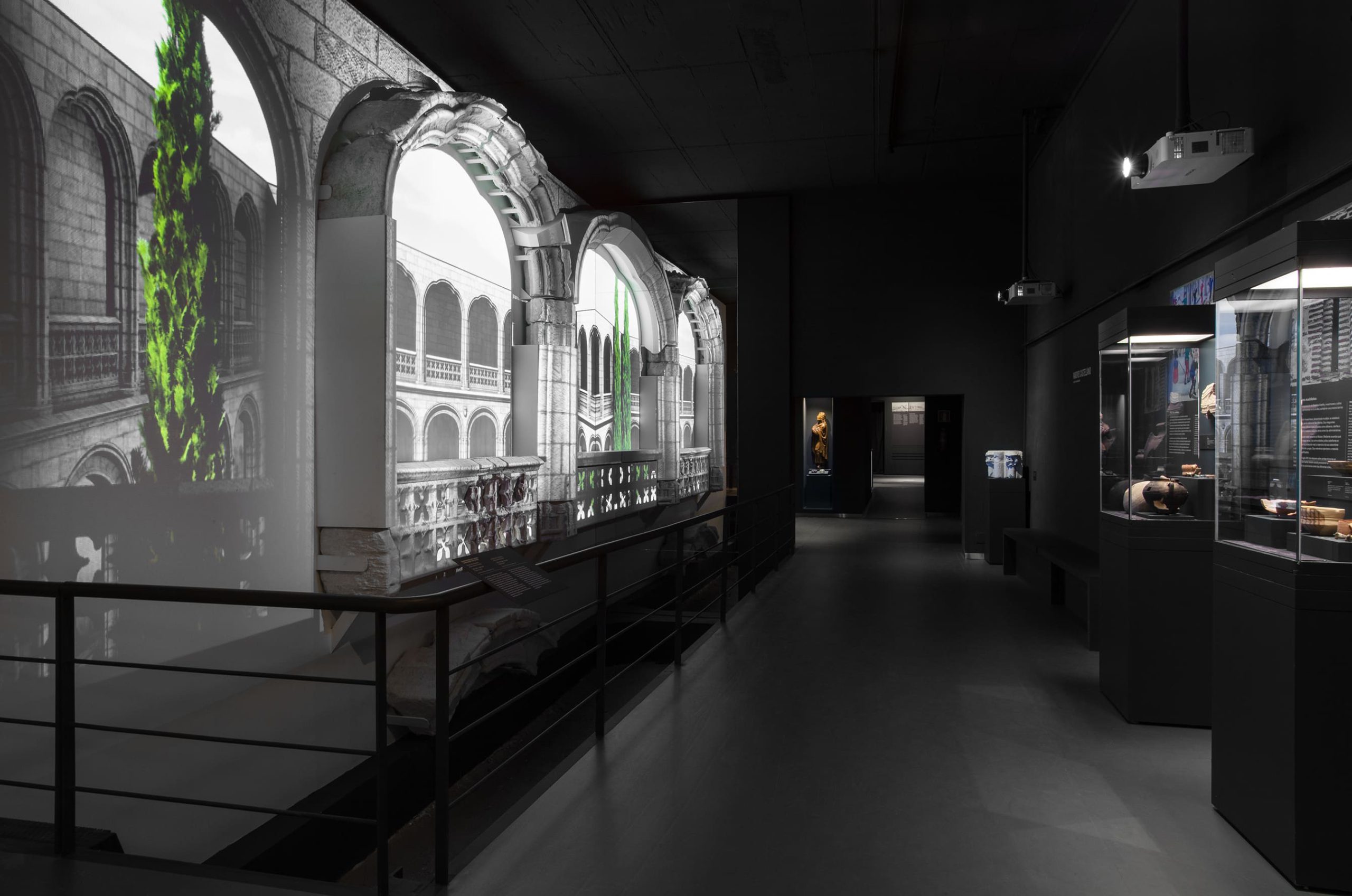
VITRINAS EXPOSITORAS Y VIDEO MAPPING EXPOSICION LOS ORIGENES DE MADRID
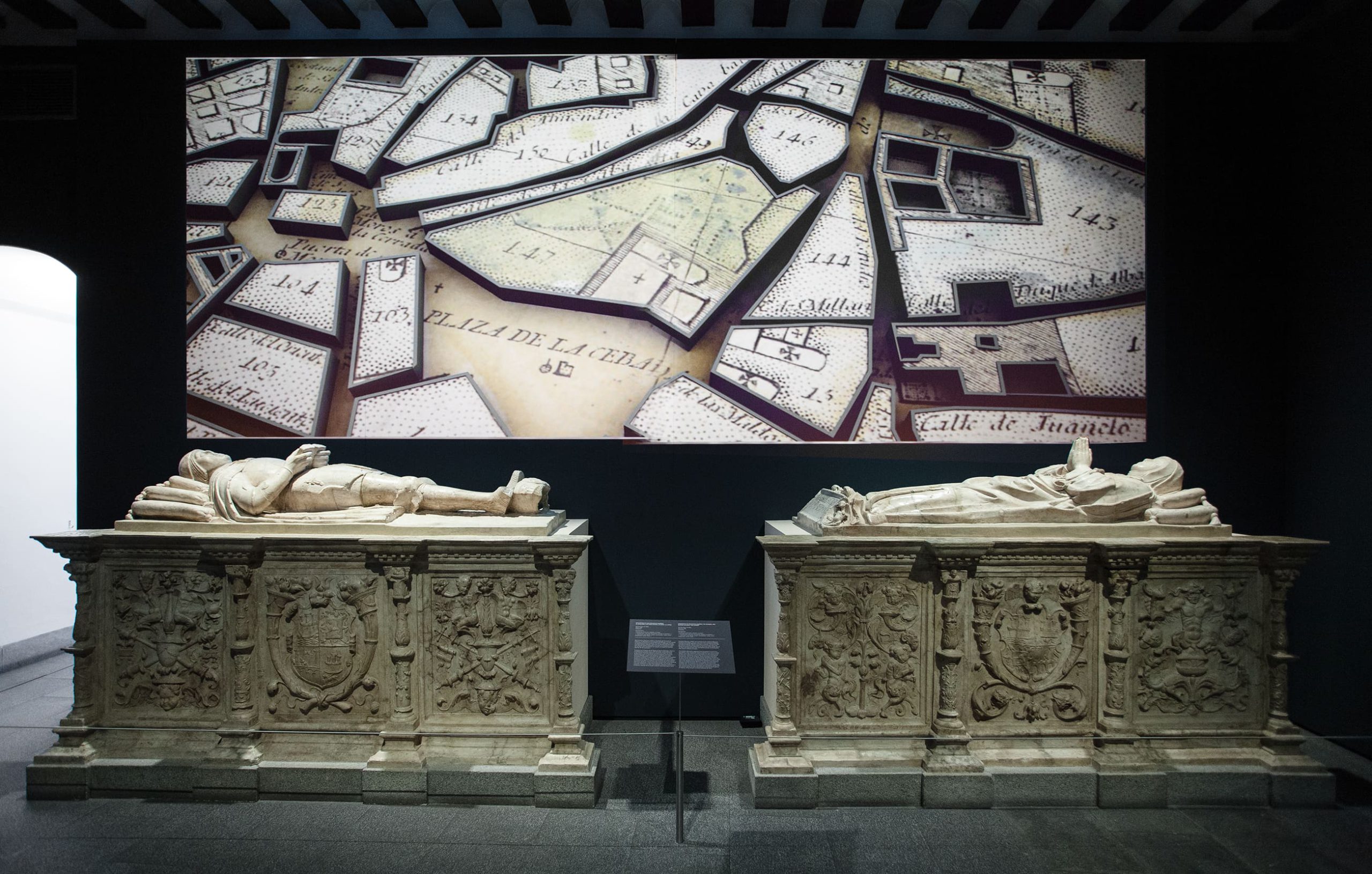
SARCóFAGOS Y VIDEOMAPPING EN EL MUSEO DE MADRID

